In sport, as in architecture, scale is everything. We design for the collective roar, the quiet preparation, the moment of elation, and the deeply human experience of gathering together. But large public assembly buildings — stadiums, arenas, halls, event spaces — are also prone to a paradox: the bigger they get, the harder it becomes to feel like you belong.
This is where the 150 Rule (as defined in social structures by evolutionary psychologist Robin Dunbar in our first essay) earns its place as a design tool, not just a social theory. Based on the cognitive and emotional threshold at which people can maintain meaningful relationships — around 150 people — the principle offers a blueprint for designing large venues that still feel local, legible, and cohesive.
In sporting environments, this is more than a nice-to-have. It’s a competitive advantage.
Why Cohesion Matters in Large-Scale Venues
Anyone who’s worked in or around stadia knows they are complex machines. They need to move tens of thousands of people safely, support elite and community sport, deliver layered revenue streams, meet intense operational demands — all while trying to foster a sense of place and pride.
But venues don’t thrive on logistics alone. They thrive on connection.
A well-designed public assembly space doesn’t just hold a crowd; it organises it into tribes, villages and communities. When supporters feel ownership of a section, when volunteers know each other by name, when staff teams are tight-knit and high-functioning — performance improves. So does safety. So does atmosphere.
The 150 Rule helps achieve this by structuring scale into socially cohesive units — clusters, pods, cohorts — each big enough to be dynamic, but small enough to be personal.
Stadiums as Villages
One of the simplest ways to think about this is to break the stadium down into villages. Not in a nostalgic sense, but in a practical, legible, operational way. These villages might be:
- Supporter bays or membership blocks (~150 people)
- Bars and restaurants of around fifty covers
- Respite and rest areas away from the madding crowd tailored to around 150 or subsets thereof
- Operational teams (e.g. security, catering, logistics, fan services) grouped into pods of ~100–150
- Volunteer and ambassador groups
- Player development units, community teams, or training squads
Each pod has its own identity, its own entry or route, its own steward or team lead, its own rituals. Think about how die-hard supporter sections operate — self-regulating, tightly bonded, often culturally distinctive. Those groups often hover around the Dunbar threshold, and they’re one of the clearest illustrations of how identity, cohesion, and performance are entwined.
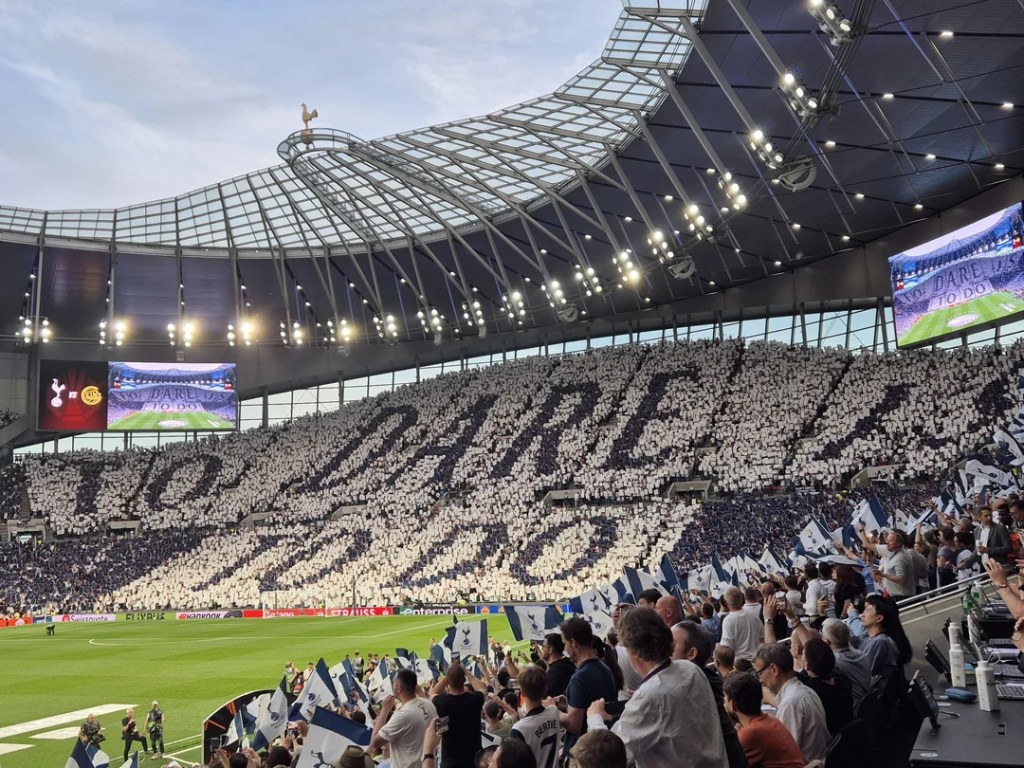
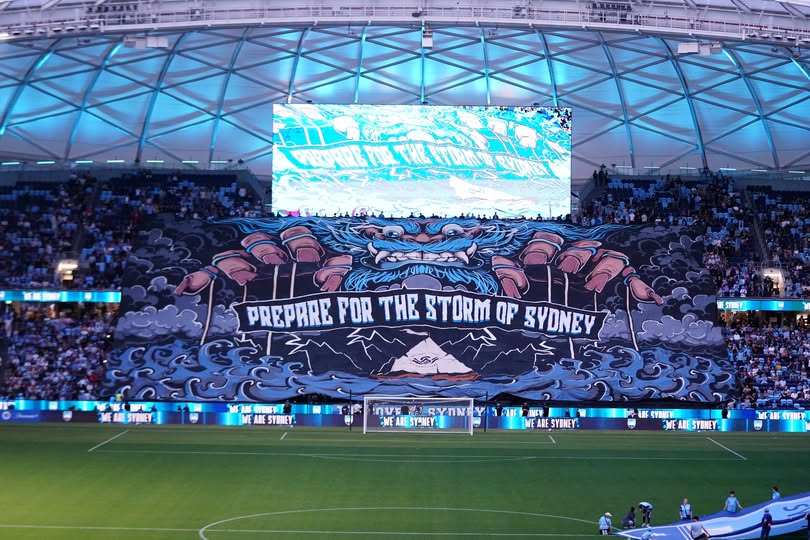
The tribal influence of football crowds is a particular point of reference. Here the choreographed display of the tifo provides visual connection and intimidation to the opposing fans as well as ‘capo’ leading the chants. The core of these groups is essentially built around groups of 150 fans connected both physically and digitally. Here in Australia the influence of the tifo and capo can be seen at AAMI Park and Allianz Stadium as they conduct the performance of the home crowd and unite the fan community.

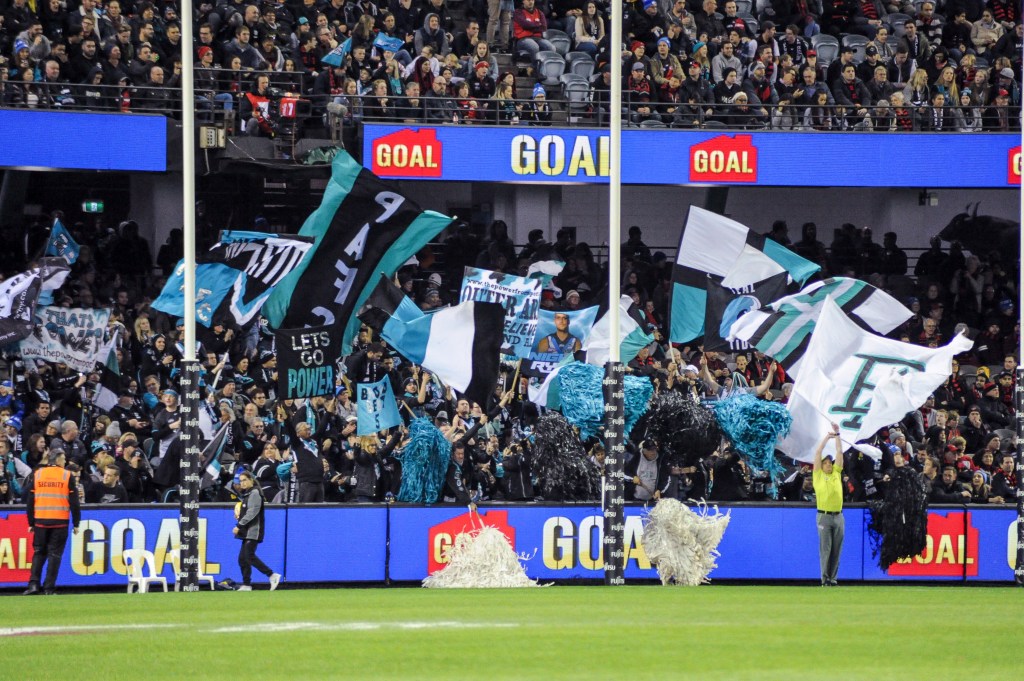
In AFL a similar network exists but without the chant and singing so long associated with football. Here, the traditions of the cheer squad, with the banner and pom-poms, give a sense of pride and belonging. Typically located behind the goal these fans aim to unite the fans and distract the opposition players. While in AFL the chant and song are not part of the fans’ culture apart from the final whistle, conducting the orchestra of the cheer squad is still an important part of the game. Once again, the community forms typically around a core of 150 supporters.

The Architecture of Atmosphere
It’s tempting to treat stadium design as purely about capacity, sightlines, and sufficient hot chip vendors, but that misses the emotional reality. People need to feel part of something. Cohesion at the scale of 150 creates exactly that.
By designing with this principle, we gain:
- Supporter belonging: People identify with their section, and their community within the crowd.
- Improved crowd dynamics: Pods allow for staggered flows, intuitive navigation, and calmer crowd control.
- Operational efficiency: Staff work better in tight teams. Volunteer coordination becomes manageable and responsive.
- Revenue opportunities: Pods create opportunities for targeted experiences — memberships, themed lounges, local food & drink — that scale.
This model also has a resilience benefit: in emergencies, people naturally look to those they know. Small, recognisable pods improve communication, coordination, and safe egress.
Designing for Tribal Belonging
The beauty of the 150 rule in public assembly spaces is that it gives us a unit of belonging. It allows us to support the rituals, narratives, and microcultures that bring venues to life — whether it’s a drum section, a player’s family box, or the tight-knit crew that runs the scoreboard every week.
As designers, we’re not just shaping physical infrastructure. We’re building the social architecture that supports performance, pride, and participation. By designing in pods — cohesive, human-scaled, and purpose-built — we create the conditions where sport and culture don’t just happen, but flourish.
 alastair richardson. architect, strategist, director of cox architecture
Leave a comment